Fairford 2003, Filton 2024, Brize Norton 2025: three protests and how the law treated them
A comparison of three protests at British defence sites, with a 1964 case as background, setting out the charges, the damage claimed, the legal rulings and the outcome so far.
Key points
- In R v Jones [2006] UKHL 16 the House of Lords ruled that aggression is not a crime under UK law. Genocide is a crime under the International Criminal Court Act 2001.
- The Filton action of 6 August 2024 was estimated to have caused £1.2 million in damage. In June 2026 the sentencing judge ruled the offences had a 'terrorist connection'.
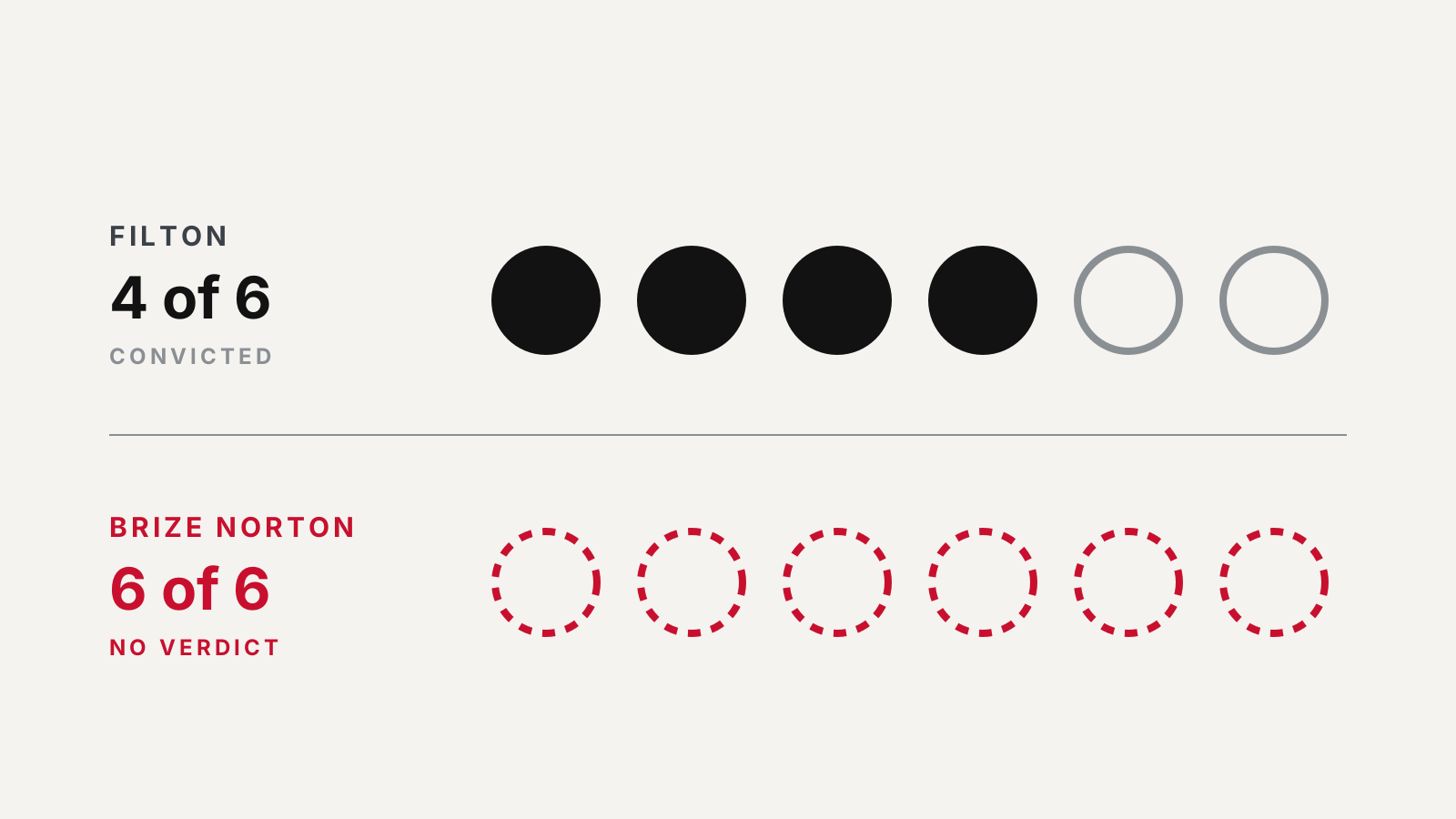
- At the Filton retrial, four were convicted of criminal damage and two were acquitted.
- The Brize Norton accused are charged under the National Security Act 2023. Their trial is due on 25 January 2027, and no verdict has been reached.
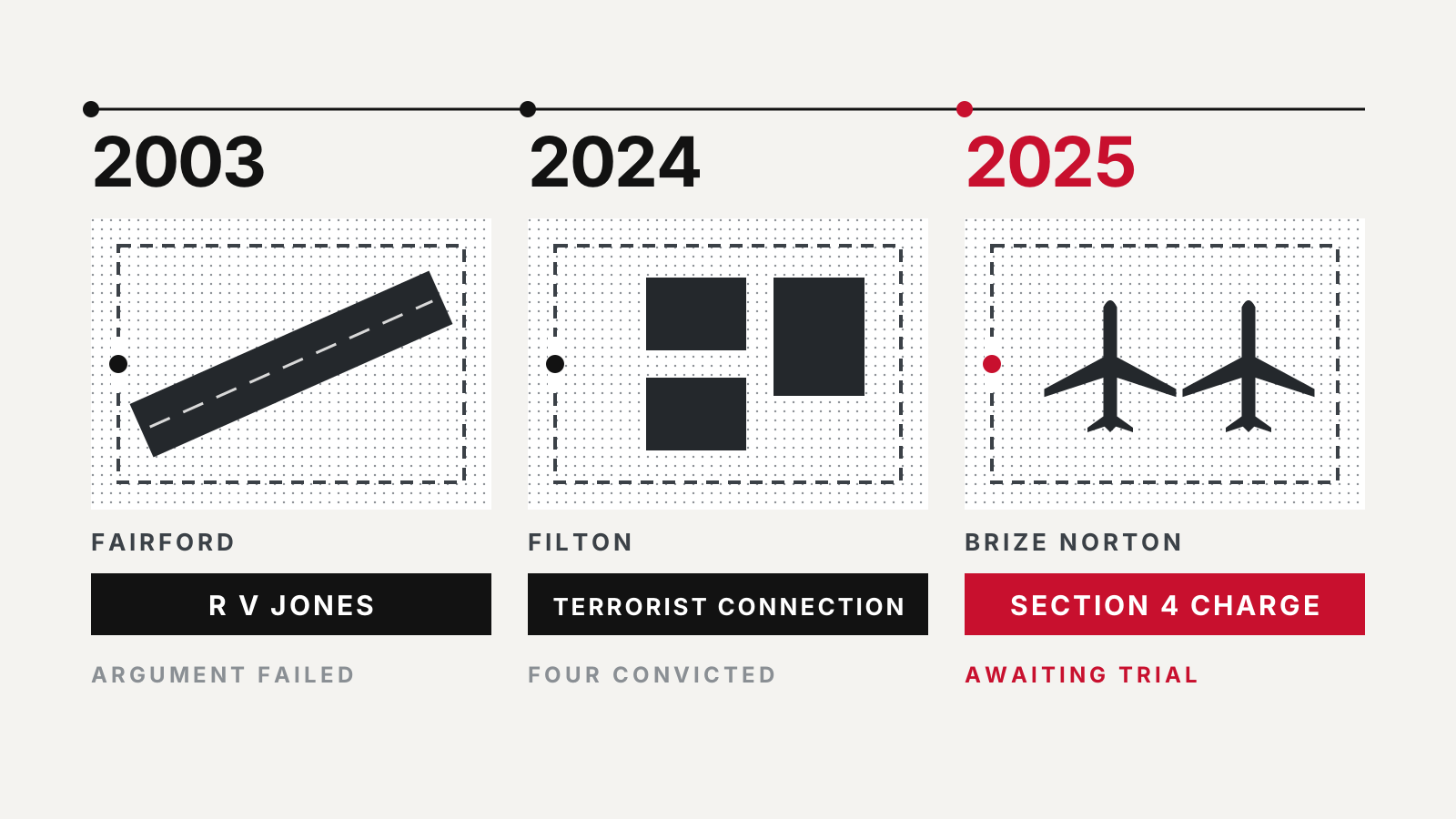
On 12 June 2026 a judge ruled that the Filton offences had a "terrorist connection". Press reporting says it was the first time that connection had been applied to criminal damage in the UK. Fairford was decided on whether aggression is a crime under UK law, Filton ended in a sentencing ruling, and Brize Norton is awaiting trial on a National Security Act charge. The 1964 case of Chandler v DPP is background.
| Year | Site | Target | Damage claimed | Main charges or law | Key legal argument or ruling | Outcome so far |
|---|---|---|---|---|---|---|
| 1964 (Chandler v DPP) | RAF Wethersfield | Planned occupation of the base by anti-nuclear protesters | Not stated in the sources used here | Official Secrets Act 1911 | Whether a purpose harmed the UK's interests was for the government to decide (House of Lords) | Protesters convicted |
| 2003 | RAF Fairford | Equipment at the base | Not stated in the sources used here | Not stated in the sources used here | Protesters argued they were preventing the crime of aggression against Iraq. The House of Lords ruled aggression is not a crime under UK law (R v Jones, 2006) | Argument failed |
| 6 Aug 2024 | Elbit Systems site, Filton, near Bristol | Israeli military drones and equipment | An estimated £1.2 million | Aggravated burglary, criminal damage, violent disorder | Judge ruled the offences had a "terrorist connection" at sentencing, June 2026 | Retrial: four convicted of criminal damage, two acquitted. Sentences of 5 years 8 months to 8 years 8 months. Appeals sought |
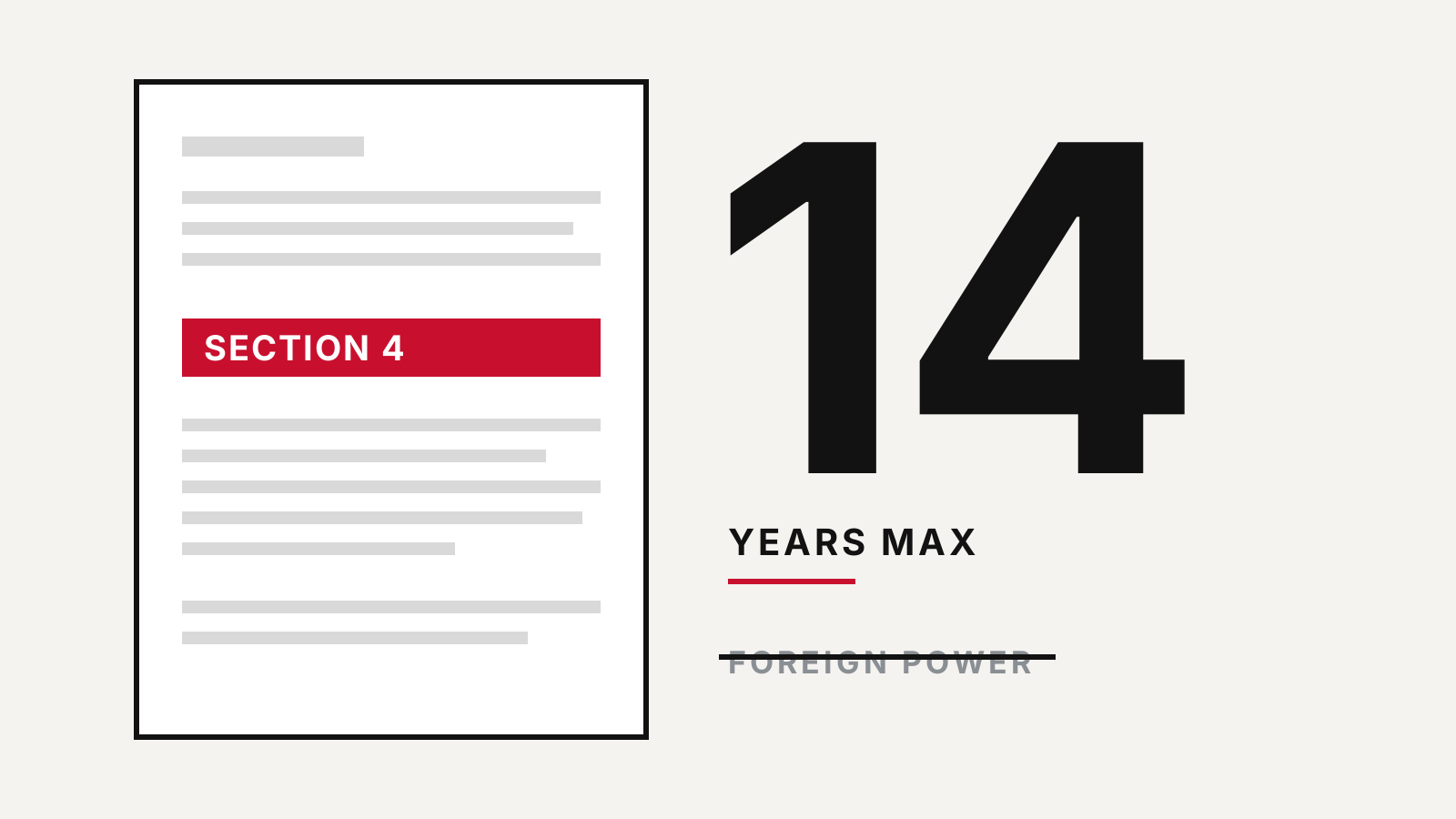
| 20 Jun 2025 | RAF Brize Norton | Two Voyager aircraft, ZZ338 and ZZ343 | Prosecutors: £1.7 million to just under £15 million. Police: about £7 million. The MoD could not substantiate either | Conspiracy to commit criminal damage (Criminal Damage Act 1971); conspiracy to enter a prohibited place (National Security Act 2023, s.4) | The National Security Act charge is contested in principle and has not been tested at trial | Not yet tried. Trial due 25 January 2027. All six are on remand |
#Chandler v DPP: the 1964 background
In Chandler v DPP [1964] AC 763, anti-nuclear protesters who planned to occupy RAF Wethersfield were convicted under the Official Secrets Act 1911. The House of Lords ruled that whether a purpose harmed the UK's interests was for the government to decide.
#R v Jones: Fairford and the crime of aggression
Protesters who damaged equipment at RAF Fairford in 2003 argued they were trying to prevent the crime of aggression against Iraq. In R v Jones [2006] UKHL 16, the House of Lords ruled that aggression was not a crime under UK law, so the argument failed. Genocide is a crime under UK law, under the International Criminal Court Act 2001.
Separately, in October 2026 two men were charged under section 4 of the National Security Act 2023 in relation to an incident at RAF Fairford. That case is ongoing. Source: Guardian; Counter Terrorism Policing.
#Filton: the "terrorist connection" ruling
According to The Bristol Cable, on 6 August 2024 activists drove a converted prison van through the fence of an Elbit Systems site at Filton and admitted destroying Israeli military drones and equipment. At the first trial, the jury cleared all six of aggravated burglary, and it could not agree on criminal damage. At the retrial in spring 2026, four were convicted of criminal damage and two were acquitted.
On 12 June 2026, Mr Justice Johnson ruled the offences had a "terrorist connection". Novara Media reports that the jury was not told this was possible until after its verdict. Socialist Worker and openDemocracy report that the judge barred the defendants at the retrial from explaining their motives, the genocide in Gaza or Elbit's role. The four sentenced are seeking permission to appeal.
#Brize Norton: the charges and where they stand
The six accused deny the charges. They are charged with conspiracy to commit criminal damage under the Criminal Damage Act 1971, and with conspiracy to enter a prohibited place for a purpose prejudicial to the safety or interests of the UK, under section 4 of the National Security Act 2023. A conspiracy charge means agreeing with others to commit an offence, so the prosecution does not have to prove that each person caused damage personally. The trial is due to begin on 25 January 2027 at Woolwich Crown Court. The charges are based on press reporting of the hearings, so they may be refined before trial. See Filton and Brize Norton compared and the case timeline.
Questions and answers
Did the House of Lords accept the Fairford protesters' argument?
No. The Lords held in R v Jones [2006] UKHL 16 that aggression is not a crime under UK law, so the protesters' argument fell away.
What sentences were passed in the Filton case?
Four defendants were sentenced on 12 June 2026, and the judge ruled the offences had a 'terrorist connection'. Sentences ranged from 5 years 8 months to 8 years 8 months.
When does the Brize Norton trial start?
It is due to begin on 25 January 2027 at Woolwich Crown Court, and no verdict has been reached.
Sources
- Four face 2027 trial over alleged Palestine Action aircraft damage
- First Filton 25 defendants sentenced as terrorists
- In landmark case, UK judge sentences pro-Palestine activists as terrorists
- Palestine Action prisoners to appeal "terrorist" sentences
- R v Jones [2006] UKHL 16
- Chandler v DPP [1964] AC 763
- International Criminal Court Act 2001